Showing posts with label Coal Tit. Show all posts

Wednesday, 6 July 2016

Green Leaves of Summer

Our latest survey (on 28 June) was notable for the range of birds seen or heard - 20 species in total. Numbers of each species were not high but the smaller birds are difficult to see at this time of year when the green leaves of summer provide plenty of cover. And the recent weather pattern of alternating rain and sunshine has led to lush growth everywhere. The bird most frequently heard around the park (and seen in the trees on upper Eastern Road) was the Wren which is one of Britain's smallest and most common birds. Its distinguishing features are the stumpy cocked tail and the dark and pale bars along its sides. Its song is a bold and strong cascade of notes ending in a trill. Both tail and song suggest a spirited bird determined to protect its territory and survive despite its small size.

              
After missing them in May, it was good to record our two migrant warblers again. We heard at least one, probably two Blackcaps singing, and both saw and heard the Chiffchaff. For the last few years, these small birds have been arriving every spring from the Med and North Africa to breed in our cool woodland shade. We also saw a Greenfinch perched high in a tree on Upper Eastern Road,  Apart from its green plumage (with yellow patches on the wings), this bird can be identified by its chunky bill and its sneering call (often described as 'wheezing' in bird books) which somehow seems aimed at us humans striving feebly below. This picture was taken on a winter's day when the sun painted it yellow.


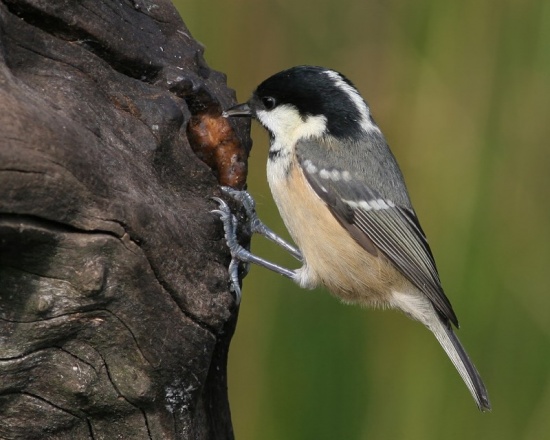
The full roll call was as follows: Blackbird 4, Blackcap 1+, Blue Tit 2, Chaffinch 2, Chiffchaff 1, Coal Tit 1, Crow 4, Dunnock 1, Goldfinch 1, Great Spotted Woodpecker 1, Great Tit 1, Greenfinch 1, House Sparrow 4, Magpie 2, Mistle Thrush 1, Ring-necked Parakeet 1, Robin 2, Starling 3, Woodpigeon 2, Wren 9. It is worth noting that we saw no Swifts in the sky above and although I saw 6 one evening a few weeks ago over my garden, their numbers sadly are on the decline. The Coal Tit was heard but not seen. It is an uncommon visitor to Hilly Fields and to our neighbouring green spaces at Ladywell Fields and the Brockley and Ladywell cemeteries. Smaller and less colourful than the Great Tit, it can be identified by the white stripe on the back of its head.

Credit: Aviceda


Thursday, 5 November 2015

Did I Mention the Crows?

We seemed to be followed by Crows when we did our monthly bird survey on 30 October. Noisy Crows, mean and hungry looking Crows. Perhaps they were warming up for Halloween next day. And the weather was sombre too, even after the rain stopped which meant many of the birds kept quiet and out of view. We saw most of the regulars, though not in great numbers and heard the occasional burst of Wren song around the wood and Upper Eastern Road. The Crows were there too, waiting for us in the autumnal trees.


We were expecting to see a few gulls on the cricket pitch when we reached the north field. They have been moving into Inner London for the winter. In the event, there was one solitary Black-headed Gull on the ground and maybe three or four up in the sky. That name - and I say this every year - is misleading. In spring and summer, its head is a beautiful chocolate brown colour; in winter, its head is white albeit with a small dark patch behind the eye. Note the red legs and bill.


The best bird of the day - our reward for two hours of trudging - was waiting for us in the Cliffview hedge: a Coal Tit, seen briefly but clearly before flying away. The Coal Tit has a black head, hence its name, and is the same size as a Blue Tit. It has a prominent white patch at the back of the head. We've seen them before on Hilly Fields but not often. By the way, there were some Crows nearby too.

Photo by Ian F, BirdForum 
Actually, Crows are good to have around on the whole. They band together and mob birds of prey, driving them away, thus providing a service for the small bird community. And maybe saving a few pigeons too. Also, if you look closely, you'll see that their plumage isn't pure black but has some very subtle tinges of blue.


The full list of birds seen and/or heard comprises Wood Pigeons, Feral Pigeons, House Sparrows, Ring-necked Parakeets, Blackbirds, Robins, Wrens, Great Tits, Blue Tits, Goldfinches, a Coal Tit, a Black-headed Gull, Magpies and, er, Crows. A total of 14 species in all. And so after finishing our circuit, we trudged up the hill to the cafe. You'll never guess which bird turned up there.


Sunday, 1 February 2015

A Record-Breaking Birdwatch

It was a fine clear morning with some winter sunshine for our 7th Big Garden Birdwatch on 25 January. Lots of people came along and either went around the park by themselves or joined one of the two guided bird walks that took place. We gave out around 70 survey sheets at the stall and as always the children had fun making fat balls and bird feeders.


Most important of all, the birds co-operated. Even before we began, a Mistle Thrush came and perched in one of the trees overlooking our stall as if to say 'Count me in!' And Lawrence pointed out a pair of Great Spotted Woodpeckers on a tree just beyond the tennis courts.


What was good once we got going was to see some of the 'occasional' species that we know are around somewhere in the vicinity but don't often turn up during surveys: three Redwings, for example - the first sighting this winter, a Coal Tit, a Goldcrest in the garden next to the bothy. And Phil spotted a Song Thrush, the first sighting since the Bird Champion recording scheme began in 2007. These birds helped to boost the final total but all the regulars like the Blue Tits, Magpies, Robins and Wrens were there too.

A Hilly Fields Blue Tit being birdwatched (photo Rebecca Simmons)
A Hilly Fields Robin also being birdwatched (photo Rebecca Simmons)
 The final tally of birds seen or heard was 26 species which is the highest total recorded on Hilly Fields Big Birdwatch day since the event began in 2009. The breakdown is as follows:
Black bird, 6
House Sparrow 9
Wren 3
Redwing 3
Blue Tit 6
Great Tit 3
Goldfinch 9
Carrion Crow 5
Common Gull 15
Black-headed Gull 24
Jay 1
Magpie 4
Feral Pigeon 12
Greenfinch, 5
Woodpigeon, 8
Ring-necked Parakeet, 5
Starling, 24
Robin, 3
Long-tailed Tit 8
Coal Tit, 1
Mistle Thrush, 2
Pied Wagtail, 1
Great Spotted Woodpecker, 2
Chaffinch, 2
Song Thrush, 1
Goldcrest, 1
And don't forget me - I come under 'Other Wildlife' (Photo Rebecca Simmons)
Well done to everyone who took part and helped us in achieving this brilliant total. And thanks in particular to Rachel who organised the stall, to Sue, Phil, Judith and Lawrence for helping with the walks and to 'the other Phil' and Sandy for general hands-on assistance. And by the way, the RSPB were there too with their own stall next to ours and signed up a whole bunch of new members. I'm sure they found it worthwhile.

Next: the Dawn Chorus Walk! But not until spring has sprung. Date to be announced...


Sunday, 7 September 2014

Heading Towards Autumn

It was still fairly quiet on the avian front when Sue and I did our monthly bird survey of Hilly Fields on 29th August. In the aftermath of the breeding season, there are quite a few juvenile birds about and we were welcomed at the lower Vicars Hill gate by a pair of young Blackbirds perched on a tree. As we worked our way along the green border towards the little wood, we saw or heard Great Tits, Blue Tits, a Wren or two and plenty of Robins which are starting to sing again after their annual moult.

Juvenile Blackbird at Hilly Fields
On Upper Eastern Road, we were pleased to see a Great Spotted Woodpecker digging for insects in the bark of a dead tree. We heard a Chiffchaff calling from the little wood ('hui') and also glimpsed a Long-tailed Tit in this area. Later on near the Bothy we heard a Coal Tit calling, which is quite unusual for the park, but it was well hidden. A few House Sparrows could be seen in the usual hedge on the Cliffview border. As always, Crows, Magpies and Wood Pigeons were about on the grassland which is covered in some areas with the small dandelion-like flower Autumn Hawkbit.

Magpie amidst the Autumn Hawkbit
A flock of 10 or more Goldfinches was seen and the dulcet squawks of Ring-necked Parakeets were heard from time to time. Finally, as we sipped coffee at the cafe, a lone Feral Pigeon waddled into view raising the total of species seen to 16 which is respectable for the time of year. We also noticed much fruit on the bushes and trees, a sign that we are heading towards autumn. The blackberries ripened early and have nearly all been picked, but the red haws are plentiful on the hawthorns, the hips are out on the dog roses and elderberries and sloes can be found in the Veda Road border.

Grey Squirrel sampling the haws

Elderberries
Sloes

Sunday, 5 August 2012

July Bird Survey

Our July bird survey took place on the 31st - a cloudy day with fleeting glimpses of the sun. We began at the lower Vicars Hill entrance and immediately heard and saw some Long-tailed Tits in the trees there - probably no more than three, but a welcome sight. Sue also spotted three Swifts soaring overhead. These  incredible flyers return home earlier than Martins and Swallows and will probably be back in Africa by the time we do our end-of-August survey.

Stock photo: Common Swift
Moving on around the park, we saw and heard a male Great Spotted Woodpecker, heard a Mistle Thrush's alarm call, saw a flock of 7 Goldfinches around Eastern Road (including some juveniles which don't yet have the red heads of the adult - see photo below), a flock of 11 Woodpigeons on the Eastern field and 4 House Sparrows in their usual playground - the hedgerow bordering the back gardens of Cliffview Road.

Juvenile Goldfinch: black and yellow wings but no red face or black crown as in the adult [Photo: Tom]
In addition, we saw and/or heard 3 Blue Tits and small numbers of Great Tits, Wrens, Robins, Feral Pigeons, Crows, 1 Magpie (much sorrow!), Blackbirds and at the very end of the survey...a pair of Coal Tits, one seen and one heard by Sue in the Vicars Hill border trees. The Coal Tit is a quite uncommon bird on Hilly Fields, last recorded on our Bird Track pages in 2010. However, we may have overlooked it in the past as they can sound like Great Tits, hang upside down like Blue Tits and mix with Long-tailed Tits!

Stock photo: Coal Tit
In all, a total of 16 species were recorded which is not bad for the quiet summer months. The most noticeable absentees were Starlings, which seem to have moved elsewhere for a while, and Ring-necked Parakeets though those little darlings/birds/pests (as you prefer) still come and go on a daily basis.


Saturday, 30 January 2010

Two more species sighted on Big Garden Birdwatch

We were so lucky with the weather being dry, bright and sunny with little wind.  However, it was only just above zero.  Last year's 20 species record was not beaten, but we did sight three species not recorded in Hilly Fields for over 2 years (see below).
There were a good number of visitors and I took parties of five or six at a time around the park to see what we could find.

I was quite surprised not to find any birds at all in the South Field, Meadow or West Field (compared with two days ago) and very few around School area.  Sports were being played in the North Field so none were spotted there either.  The vast majority were to the south of the Stones Field and east of the East Field (i.e. along the Cliffview Road hedge).
This is the result:

Blackbird (2)
Blue Tit (2)
Carrion Crow (3)
Chaffinch (3)
Coal Tit (2) - First sighting
Common Gull (1)
Dunnock (1) - First sighting
Feral Pigeon (2)
Goldfinch (2)
Greenfinch (2)- First sighting
Great Tit (3)
House Sparrow (11)
Long-tailed Tit (2)
Magpie (2)
Mistle Thrush (2)
Redwing (1)
Robin (1)
Starling (1)
Woodpigeon (4)

[Correction on 01/02/2010: The Dunnock was previously omitted from this list (my error), and today I've seen one in my garden, a mere 50m from where we spotted it on Saturday.]

Long-tailed Tit

We are all indebted to Vicki Wheeler, Nature Conservation Officer, for organizing the event - especially the tea, coffee and biscuits which were certainly needed after wandering around the park in such cold weather.  With Vicki's help, our younger visitors made birdfeeders from pots, lard and birdseed to take home and hang up in their own gardens.