Showing posts with label Sparrowhawk. Show all posts

Tuesday, 7 December 2021

Sparrowhawk On The Fence

 Thanks to whoever shared this photograph on the Cliffview Road WhatsApp group last month. It shows a male sparrowhawk sitting on a fence in one of the gardens that back onto Hilly Fields. If you look closely, you can see a mouse or vole held between its talons. Proof that these marvellous birds of prey do prey in the gardens that border our park. And that they don't just prey on sparrows as their name suggests.

We have a similar photograph of a male sparrowhawk in our Birds of Hilly Fields booklet along with the following description: 'A woodland predator, it has evolved great skill in flying fast around and between trees and usually succeeds in catching prey through the element of surprise. Its extra long toes also help to catch birds in flight. The male is smaller than the female and has a less fierce, almost dopey look. It has a reddish barred chest and grey back, whereas the female has grey-brown barring to the chest, a white stripe over the eye and brown back.' This photo was taken in 2015 by Keith Ward in his Cliffview Rd back garden.

Our booklet has sold well, but copies are still available from the Hilly Fields cafe or online from https://supportmylocal.org/store/rachel-mooney/ where you can either buy it alone for £3.50 or in various deals with tote bags and other items. Ideal gifts for Christmas and all profits go to the Friends of Hilly Fields.

At the moment, the RSPB still intends to hold their annual Big Garden Birdwatch event at the end of January: 'Simply count the birds you see in your garden, from your balcony or in your local park between 28 and 30 January 2022.' Last year we had to cancel our Big Birdwatch event, but hopefully we will be able to hold it again on Hilly Fields on Sunday 30 January with the usual display table outside the cafe, ID sheets, activities for kids and a guided walk. More details next month.


Sunday, 5 April 2015

March Survey and Dawn Chorus Walk

Spring is here and that was evident from the birdsong on 30 March when Sue and I did our monthly survey. Great Tits were calling incessantly, Wrens and Robins burst into song with great frequency and Blackbirds and Blue Tits joined the chorus. In the little wood, the effect was almost orchestral. There was also much chasing between branches. Things were not quite so harmonious on upper Eastern Road where a very noisy battle was taking place - no doubt over territory or a nest - between two Mistle Thrushes, a Magpie and a Crow. Eventually it settled down, but the Mistle Thrushes remained on the alert.


 The gulls that have been wintering in the park are gone - another obvious sign of spring. On the bowling green, we spied a Pied Wagtail prospecting for worms while in one of the plane trees above the green, a pair of Crows were repairing last year's nest and settling into it. By this time, cloud and strong winds were building up and after checking that at least some House Sparrows were hopping about in the Cliffview hedge, we legged it to the cafe. Our final list totaled 21 species: 11 Robins, 7 Woodpigeons, at least 6 Wrens. 5 each of Blackbird, Great Tit and Starling, 3 House Sparrows, 2 each of Blue Tit, Chaffinch, Crow, Long-tailed Tit and Mistle Thrush, 1 each of Dunnock (singing), Feral Pigeon, Goldfinch, Great Spotted Woodpecker, Greenfinch, Jay, Magpie, Pied Wagtail and Ring-necked Parakeet.

Crows nest above the bowling green
Next day we were back again at 6am for the Dawn Chorus Walk which covered both Hilly Fields and the Brockley and Ladywell cemeteries. The attendance was good - over 20 people turned up - and the birds were singing lustily as on the previous day. However, the 42 mph winds which had been blowing all night had still not abated and this made it a little difficult at times to hear even the well-known songbirds such as Blackbird, Robin and Wren, especially for some of the enthusiastic beginners with us. However, we persevered, had very good views of a pair of Mistle Thrushes, heard the 'laugh' or 'yaffle' of a Green Woodpecker and some of us heard the song of a late rising Chaffinch. The Goldfinches disgraced themselves by staying in 'bed' - wherever that was.

Dawn on Hilly Fields [Photo: Annie Cole]
In the cemeteries, it was calmer and quieter. We heard a Song Thrush singing from some distance away, then heard a Chiffchaff singing and tracked it down so that some of the group could actually see it. Chiffchaffs are warblers named after their staccato song, migrants from Africa and the Med which come here to breed in the spring. By now it was full daylight and within a few minutes we were lucky enough to see three Jays and catch brief glimpses of a Sparrowhawk and of the elusive Goldcrest which is Britain's smallest bird.  After that, everybody went home or off to work!

Daylight in the B&L Cemeteries [Photo: Rachel Mooney]
21 species were seen or heard: Blackbird, Blue Tit, Chaffinch, Chiffchaff, Crow, Dunnock, Feral Pigeon. Goldcrest, Great Tit, Greenfinch, Green Woodpecker, Jay, Magpie, Mistle Thrush, Ring-necked Parakeet, Robin, Song Thrush, Sparrowhawk, Starling, Woodpigeon, Wren. Many thanks to all who made the effort to come along, to the Friends of Hilly Fields and Brockley Central for publicising the event and to Mike Guilfoyle of the Friends of Brockley and Ladywell Cemeteries who made possible our access.


Wednesday, 25 February 2015

Sparrowhawk

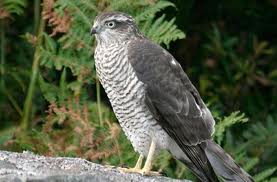
Thanks to Keith for this great shot of a male Sparrowhawk, taken in his garden which backs on to Hilly Fields. Keith has feeders in the garden which attract many small birds, so one can see why the Sparrowhawk was lurking. The birds made themselves scarce, however, on this occasion. The reddish/orange colouring at the front and around the neck are the features that identify it as a male. The female has brown chest bars at the front and  a large white stripe over the eye. The female is larger than the male as is often the case with birds of prey (eg. Kestrel and Peregrine) and has a fiercer expression!


According to the RSPB, the Sparrowhawk "is adapted to hunting birds in confined spaces like dense woodland, so gardens are ideal hunting grounds for them." And despite their name, Sparrowhawks do not just go for sparrows. Mark Cocker in Birds Britannica says: "birds form almost the entire diet of the sparrowhawk" and "more than 120 species have been recorded [as prey] from the smaller members of the tit family to the black grouse." A magnificent bird but one that can bring 'nature red in tooth and claw' right into your garden.

Tuesday, 8 October 2013

Sparrowhawks and Willow Warblers

September was a difficult month to organise a bird survey as the Hilly Fields bird champions slipped away on holiday at various times. It was in any case a quiet month for bird activity on the whole (as it was last year) for various reasons including the fact that some birds are still moulting, that the mighty effort of attracting mates and finding food for the young is over and that the need to defend territory is not quite so important. There is also a lull before the hordes of winter migrants arrive and before some non-migrant birds such as starlings and gulls return to the inner city. I did a walkabout one overcast morning and counted only 10 species, all of them common birds. However Sue had much better luck on the very last day of September and found 16 species including a Sparrowhawk and a Willow Warbler, so naturally we are recording that as our main survey of the month!

Sparrowhawk
The Sparrowhawk was soaring for some time over the south field adjoining Eastern Rd and Adelaide Ave and was probably hunting. It disappeared eventually in the direction of Brockley and Ladywell Cemeteries. The Willow Warbler is the first to be recorded on Hilly Fields, pushing our grand total since 2007 up to 42 different species. They are summer migrants and not uncommon in Lewisham, so I suspect it has visited the site before but not been detected. Its appearance is very similar to that of the Chiffchaff, although its song is quite different. Once it stops singing as most birds do around July, the observer has to try and make out 'paler legs, longer wings, slightly longer body,cleaner yellow underparts, clearer stripe above eye' (RSPB Handbook). Luckily, in this case, the bird was at eye level on a bush between the park and the Veda Rd back gardens and Sue could identify it fairly easily. By now, it will be well on its way back to West Africa. Let's hope it stops by again next year.

Willow Warbler (Credit: Andreas Trepte)
In addition to those already mentioned, Sue also recorded 8 Woodpigeons, 6 Blue Tits, 5 of Long-tailed Tit, Goldfinch and Robin, 4 of Blackbird, Great Tit and Ring-necked Parakeet, 3 of Crow, Feral Pigeon and Magpie and 1 each of House Sparrow, Chiffchaff and Goldcrest. Looking ahead, winter migrants are already starting to arrive in the UK and those that we're most likely to see on Hilly Fields are Redwings and Fieldfares, as well as - we hope - a few wintering Blackcaps from Central Europe. The Black-headed and Common Gulls should be moving inland and arriving late October. The Fieldfare which often goes around with Redwings (both being members of the Thrush family) is a handsome bird which I particularly hope to see again as we spotted only a small number last winter.

Fieldfare
Finally, a date for your diaries - 20 October. The Green Fair is coming! Lots of fantastic activities as listed below and some may even involve birds. Do come along and join in.


Footnote 1: I almost forgot to mention that a Tawny Owl was heard again during the month in the Eastern Rd area. No further information as yet but it was heard last year from September through to January, so a consistent pattern may be emerging. Please let us know via the comments facility if you hear it.

Footnote 2: Redwings and Fieldfares seen today (10 October) on Ladywell Fields.

Tuesday, 3 September 2013

Last Days of Summer

August 28th was a fine sunny day for our monthly survey but the birds weren't coming out to play. We heard more than we saw and our final tally was only boosted to 13 species by the screeching of an unseen Jay and the brief glimpse of a Green Woodpecker which was probably visiting from Brockley & Ladywell cemeteries. Great Tits and Blue Tits were fairly active in the trees and small flocks of Crows, Magpies and Woodpigeons followed us about the park. The good news is that Robins are singing again after their summer moult when they retreat into the undergrowth and sulk. We estimated that we'd seen or heard 7 in total on our rounds.


We saw only one Blackbird which is unusual and heard the occasional Goldfinch. Three House Sparrows, two Ring-necked Parakeets and a Feral Pigeon made up the total. The week before, Sue had seen even fewer birds but had at least the excitement of watching a Sparrowhawk being chased by a Crow! Before going for a coffee at the cafe, we took a look at a recently vacated Robin's nest just inside the bothy gates which Lee the park keeper had pointed out to us - a cup nest created in thick ivy against a wall. I wonder how many chicks were born here and how many survived?


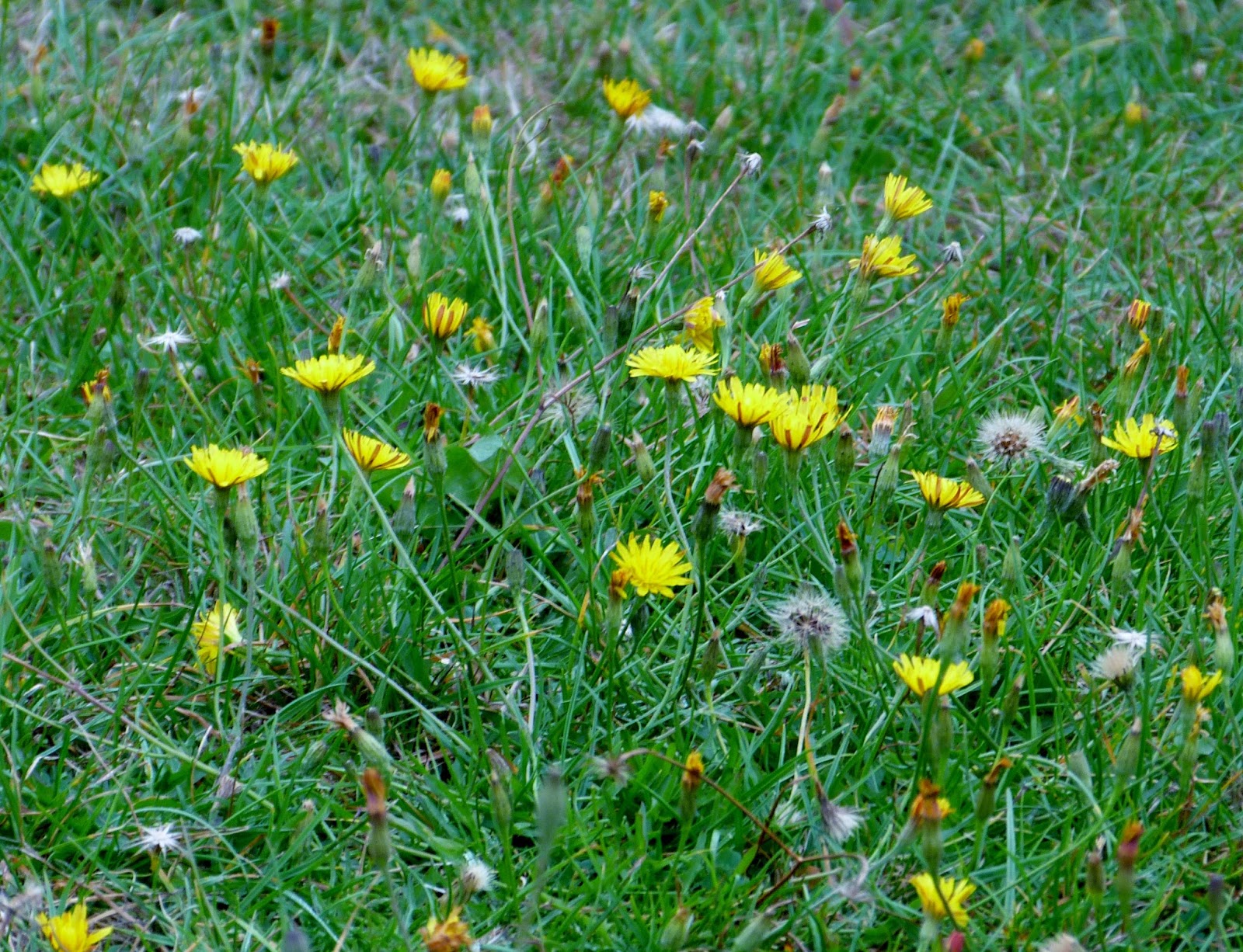
Elsewhere in Lewisham, a few Swallows have been seen which means they're probably starting to think about heading south. And in other news, blackberries are ripening again after having had just the right amount of sunshine and rainfall in the last few weeks. I haven't sampled the Hilly Fields crop, but tried some at the RSPB Rainham reserve in Essex and they were delicious. On the park grassland, buttercups have given way to swathes of little dandelion-like flowers. These have been identified for me by Nick Bertrand (ace Creekside Centre botanist) as Autumn Hawkbit. Taken together, all these signs can mean only one thing. The last days of summer are upon us.


Postscript 3rd September: heard a Chiffchaff singing again on Eastern Road this morning. I mentioned last month that a pair of Chiffchaffs had produced at least one youngster on Hilly Fields this summer. It's possible that they could overwinter here, but more likely that they'll be off back to the Med in 2-3 weeks time. And who can blame them?

Tuesday, 12 February 2013

Predators in the Park

Some interesting news has turned up via the Comments column in my previous post. Gavin reports seeing a Short-eared Owl over Hilly Fields on 13 October last year. It was being mobbed by crows at the time and after a few minutes drifted away eastward without landing. Earlier that day, the same bird had been seen over the London Wetland Centre near Barnes where it was being mobbed by gulls. Just one of the perils of being a day-flying owl. We can be reasonably sure it was the same bird in both places as Short-eared Owls are quite scarce in London. Meanwhile, the Tawny Owl that we've mentioned in earlier posts has not been heard since mid-December, but as one correspondent pointed out, local residents tend to have their double-glazed windows firmly shut at this time of year. All owls are predators and prey on other birds as well as small mammals, which accounts for the preemptive mobbing. In this pic, a Short-eared Owl is about to make short work of a vole.

Photo: Mark Hancox
'Hilly' reports seeing a probable Sparrowhawk yesterday in the cherry tree by the Bothy. Sparrowhawks have nested in Brockley Cemetery for at least the last two years and sightings are reported from time to time.  See the blog post for 7 September 2008 by Keith for a record of his close encounter with a Sparrowhawk. Interestingly, when Keith started this blog back in 2007, he reported seeing quite large numbers of House Sparrows on the Cliffview side of the park, as many as 50 on one occasion. Nowadays, the most we see is 8. I wonder where they can all have gone? Unfortunately, "gardens have become one of their favourite killing fields" says Mark Cocker of the Sparrowhawk in his excellent book Birds Britannica. He notes also that they eat a wide range of birds "from the smaller members of the tit family to black grouse". Perhaps we could interest them in parakeets...


The other predator seen over Hilly Fields is the Kestrel. Sue recalls watching them nest and breed in the school building back in the 1980s (before it became Prendergast), but they are not quite so common around the park now. Only one sighting in 2012 as far as I know. The Kestrel is famous for hovering in one spot, almost standing still in mid-air while it searches the ground for prey. It does take small birds and chicks, but mice and voles are preferred. Keith (again) stumbled across one back in 2008 tearing apart what was probably a mouse at the edge of the meadow and got this photo of it standing over its prey.


So there we are - it's a bird-eat-bird world out there, sometimes. But at least their food chain gives birds of prey one big advantage over us. They always know what they're eating.

Saturday, 3 November 2012

October Bird Survey

The last day of October was overcast and windy with rain showers also forecast. These are not the sort of conditions which entice birds out into the open, particularly when there's still plenty of dense foliage for them to shelter in. My expectations were low therefore as I trudged up Vicars Hill towards the park. On meeting Terry, however, who joined me for this month's survey, I discovered that he'd had already seen a flock of Long-tailed Tits, a Goldcrest and a Great Spotted Woodpecker all in the Eastern Road area! By the end of our walkabout,we'd clocked a healthy total of 18 different species. The Goldcrest, which I saw later in the garden area was hanging out with the Long-tailed Tits. It is officially Britain's smallest bird and has a quiet high-pitched call. The yellow and black striped head crest (from which it gets its name) is difficult to see from the ground and I'm not sure I would have recognised it without Terry's expert eye. This is only the second time that we Bird Champions have seen one on Hilly Fields, the last being in March 2009. Here's a cute little clip from You Tube:


The other significant feature of our survey was the return of the gulls which are moving back into the city now that the temperature is dropping. Small in number at present - 9 Black-headed Gulls and 2 Common Gulls waddling around next to the cricket pitch - but more will follow. The Starlings are also back - we counted 13 noisily convening in one of the trees on the Northern field - but again more will turn up as the autumn and winter progresses. We counted 80 during the RSPB Birdwatch event last January. Here's a pic of them dropping in to join a gull on the grass.


Also seen or heard: several Robins calling in different places, one briefly singing; 2 Jays in trees between the wood and the orchard; 3 Feral Pigeons, 8 Wood Pigeons; 2 Blackbirds, one a black-billed juvenile; 5 Crows and 1 Magpie (for sorrow); small numbers of Great Tits and Blue Tits calling in various locations; 2 Goldfinches and, in the Cliffview back gardens hedge, the usual family of 4 House Sparrows, males outnumbering female by 3:1; and a solitary Ring-necked Parakeet.

PS. Shortly after posting the above, Sue told me she had seen earlier this week "a Sparrowhawk going from HF across Vicars Hill, a Peregrine Falcon going the other way over Algiers Road and a Green Woodpecker on an ash tree near the garden/bothy on Hilly Fields". This is the first Green Woodpecker that we have spotted on Hilly Fields though they can be found quite often in Brockley and Ladywell cemeteries.

Sunday, 3 June 2012

May Bird Survey

The late May heatwave was still in progress when Sue and I did our monthly bird survey on Tuesday 29th. The park was looking good in the sunshine even though all the beautiful white blossom on the Hawthorns and Horse Chestnuts has disappeared. The birds were lying low at first, so much so that we started to count the Speckled Wood butterflies instead, except there were too many of them!

Then we had a surprise - a constant high-pitched noise heard behind Prendergast School turned out to be coming from a hole high up in some kind of ornamental oak tree. The arrival at the hole of a male Great Spotted Woodpecker and then soon after a female confirmed that we had found a nest with hungry woodpecker fledglings. They couldn't be seen from ground level, so numbers are uncertain but we will be keeping an eye on the nest. There are normally between five to seven eggs in a GSW brood, but eggs and fledglings can be taken by other birds while the parents are out hunting for food. While we were there, the female was seen at a tree some thirty yards away, presumably digging insects out of the bark.

Male and female GSWs. Female has no red patch on back of  head, but does have red under the tail like the male
Sue also found a Blue Tit nest in a dead tree near the tennis courts. One of the parents was in attendance while we watched. Apart from that excitement, we noted a slight revival in the number of Starlings, ten being spotted together at one point. Otherwise the following birds were seen and/or heard, all in small numbers: Blackbird, Carrion Crow, Magpie, House Sparrow, Woodpigeon, Chaffinch, Goldfinch, Great Tit, Wren, Robin and Ring-necked Parakeet.

A few days earlier (25th), Sue spotted three Pied Wagtails on the bowling green and then witnessed a Sparrowhawk swoop down on them! All three appeared to evade capture.


Woodpecker Update: the picture below was taken by my daughter on Saturday afternoon (2 June) and shows one of the fledglings peeping out of the hole. The crimson crown on top of its head will disappear with its first moult. Hopefully, it's not an only child...


Friday, 2 March 2012

Leap Day Survey


Our February survey took place on a leap day (29th) though I'm sure to the birds it was just another morning and a mild one at that. A total of 22 species were seen or heard which is a good tally and includes a Dunnock heard singing in the trees bordering the south-east field, a fine pair of Mistle Thrushes in the wood and, for the first time this winter, a Redwing in the trees on Eastern Road. Yes - just one. For some reason, Redwings have given Hilly Fields a miss this year despite being seen in such nearby places as Brockley Cemetery, Brookmill Park, Ladywell Fields and Greenwich Park (450+ recorded there on 10 February).

What we do get on Hilly Fields are Common Gulls which are not always found in other local gull hotspots. Close examination of the flock on the north field around the cricket pitch revealed 10 Common and 28 Black-headed Gulls - a few of the latter actually sporting the "black head" (strictly speaking, dark brown) which develops in the spring and summer.

There were fewer Starlings than on Big Birdwatch day (30 compared to 80 then) and fewer Goldfinches (4 compared to the usual 16+). However, a healthy number of Chaffinches were around and a trio of Greenfinches were sitting in the Eastern Rd trees which they often frequent. Above the path that borders the east field, a Magpie was diligently building a new nest - a reminder that the main breeding season is almost upon us.


On the birds of prey front, Sue spotted a male Kestrel on 7 February perched on a ledge on the western side of Prendergast School, while Lawrence reports the following: "Today 23rd Feb 2012 we saw a pair of Sparrowhawks perch in a sycamore tree at the end of our garden between Wickham Rd and Breakspears, they sat apart for a while until a Jay attacked one and this revealed the other in the tree behind as they went for the Jay, didn't get it. Fantastic!" The Sparrowhawks may well be part of the family that nested in Brockley Cemetery last year. It's good to know that they're still around, though perhaps not so good for other birds!

Male kestrel


Sparrowhawk

Thursday, 10 June 2010

Evening Birdsong Guided Walk

Twelve of us joined Chris McGaw (Rivers and People Project) for an excellent guided walk around Hilly Fields this evening.  At times the wind kept the birds quiet but we did hear and see 15 species:

Heard (but I didn't see)
  • Blue Tit
  • Great Spotted Woodpecker
  • Great Tit
  • House Sparrow
  • Robin
  • Wren
Heard and seen
  • Blackbird (1)
  • Carrion Crow (2)
  • Chaffinch (1)
  • Goldfinch (1)
  • Magpie (5)
  • Mistle Thrush (2)
Seen (but I didn't hear)
  • Starling (7)
  • Woodpigeon (15)
  • Sparrowhawk (1)
Yes!  The Sparrowhawk is back.  At around 20:00 it flew from Vicars Hill direction along the rooftops of Cliffview Road.  It all happened too fast for a photo, but here's a couple I took earlier of a Mistle Thrush on a nearby tree and our party watching it.

Chris (8th from the left) will be taking more bird-oriented walks around the park in the future and I'll give notice of these events in this blog.

Sunday, 5 April 2009

Sparrowhawk


This afternoon, around 5:30, a Sparrowhawk flew from the park and landed right beside the birdfeeders in my garden. It must have thought a meal would eventually turn up as it stayed there for about five minutes. Anyway, I did manage to get a pretty good photo of it before it flew back into the park.

(I include it in this blog because my garden backs onto the park)

Monday, 22 December 2008

Eleven species today

For only the second time this year, there were eleven bird species in the park when I visited between 11:30 and Noon. The last time I found that many was 26th January 2008.

There were:

Black-headed Gull
Blackbird
Blue Tit
Carrion Crow
Goldfinch
Great Tit
House Sparrow
Magpie
Robin
Starling
Woodpigeon

I must also mention that on Friday 14th December I watched a Sparrowhawk wheeling around over Hilly Fields Park.

Sunday, 7 September 2008

Sparrowhawk!

In my garden, hanging below a lilac tree, is a birdfeeder. While I was filling it this afternoon several House Sparrows landed in the tree, queuing up to feed as they often do during the daily fill.

Suddenly something spooked them and they scattered in all directions. In its panic one even brushed my ear as it flew past me.


Then I saw the Sparrowhawk, perched directly in front of me about a metre away at eye-height. It had flown in from Hilly Fields and just failed to grab a meal. We both remained motionless, staring at one another for about ten seconds then the Sparrowhawk flew off.

What an experience!