Monday, 30 January 2012

Big Birdwatch Report

Nearly 30 adults and 19 children attended this year's RSPB Big Birdwatch event on Hilly Fields - a good turn-out considering it was a cloudy and cold Sunday morning. Illustrated sheets of the most common birds were handed out and people set off to scour the park in search of them. Some of the children who came along stayed at base camp (outside the Bothy) to make bird feeders and lard and seed balls with heart-warming enthusiasm.


The final tally of species seen was 21 which equals last year's total. The species seen are almost identical as well, except that Chaffinches were seen this year but no Redwings. The 2012 list which will be sent to the RSPB and to BirdTrack is as follows:

Blackbird - 5
Black-headed gull - 14
Blue tit - 4
Carrion Crow - 3
Chaffinch - 5
Common gull - 10
Feral pigeon - 5
Great tit - 3
Greenfinch - 4
Goldfinch - 6
Great spotted woodpecker - 1
House sparrow - 16
Jay - 3
Long-tailed tit - 3
Magpie - 4
Mistle thrush - 2
Ring-necked parakeet - 6
Robin - 3
Starling - 80
Wood pigeon - 5
Wren - 2

Well done to the person who spotted 5 Herring Gulls flying over the park, but we've checked the RSPB website and "flyovers" cannot be counted. The birds have got to be in the garden or in the park. Sorry but rules is rules!  The trouble with birds is that they will fly around and thus double counting - which could mask a decline in bird population levels - is always a risk; hence the other rule about only recording the maximum number of each species that you see at any one time.


Many thanks to all who came along. Thanks also to Rachel of the Hilly Fields User Group who organised this event and Judith from Glendale for her assistance.

NB. After review of the lists submitted, we added 1 Dunnock and 1 Pied Wagtail to the list above making a grand total of 23 species.

Sunday, 22 January 2012


Yes, it's the annual RSPB Birdwatch this weekend. We will be leading walkabouts on Hilly Fields to identify and count the birds we see. The stats will be sent to the RSPB and will also be input to BirdTrack, a database used to monitor bird population levels nationwide.

So come along on Sunday 29 January and help. Don't be shy - we are not experts, just enthusiasts and anyone with an interest in birds can join in. Please bring binoculars if you can.

If you want to do a bird count in your own garden as well, you can download a form from:  http://www.rspb.org.uk/birdwatch/  But remember the RSPB's golden rule: "We need the highest number that you see at any one time, otherwise you may be counting the same bird twice".

Wednesday, 21 December 2011

Happy Solstice!


In view of the Xmas festivities, Sue and I brought our survey of Hilly Fields bird life forward this month and walked around the park on 19th December - a grey, chilly Monday morning which ended in rain. Despite these conditions, it was worthwhile in terms of the range of species seen.

Winter has brought more gulls inland and Hilly Fields had both Black-headed and Common Gulls in small mixed flocks. The simplest way of telling these two apart (given that the Black-headed gull has a white head at this time of year!) is by the colour of legs and bill: red = Black-headed Gull, yellow = Common Gull. If you can't make out the colours, then the Common Gull has a darker back, is slightly larger and  seems to hold itself more erect when walking on the ground. It also lacks the black mark behind the eye which is an easy winter identifier of the Black-headed Gull.

Common gull and black-headed gull together

The Starlings have grown in number since last month - there were at least fifty moving around the park today. We also saw a dozen Crows descend on a tree on the border of the Stones field - not quite enough for a "Parliament" (one of the collective names for Crows), more like a Select Committee. We also caught sight of that colourful corvid, the Jay - one at first in the wood and then two in the trees around the tennis courts and briefly on the ground hopping forward in slow deliberate fashion.

Jay
The upper part of Eastern Road was so alive with birds that it was difficult to keep track. The family of Blackbirds was there again (see 1 November post), along with Great Tits, Blue Tits, Goldfinches, Greenfinches and Chaffinches. From time to time, the finches swooped down to drink from the gutter which is, in effect, their watering trough. Most rewarding of all was a pair of Nuthatches, heard and then seen in the trees and even perched on a lamppost. It was unusual to find them close to the centre of the park as previous sightings have been on the eastern edge and in the adjoining Cliffview back gardens (see 15 July post).

Also recorded were a Great Spotted Woodpecker (seen flying overhead by Sue), several singing Robins, Magpies, one or two Ring-necked Parakeets, four House Sparrows in the Cliffview hedge (as usual), a resurgence of Woodpigeons (19 in total) and a few Feral Pigeons. Oh - and not forgetting the Mistle Thrush perched high in a tree on the Stones field border and driven off at one point by a smaller bird - probably a Great Tit. It flew to another tree further along and was heard to emit a few feeble phrases of song, almost as if it was too much trouble.

By contrast, a Wren burst briefly into full-blooded melody near Eastern Road - "a cascade of notes...ending with a loud and distinctive trill" as my RSPB Handbook puts it. And a Great Tit gave

Great tit
a warming-up performance of it's famous two note song. It never sounds to me like "teacher teacher", but that's how the bird books describe it. And it will drive us all mad in the weeks and months to come.

But for now - Happy Solstice, Happy Xmas, Happy New Year!


Thursday, 1 December 2011

November Bird Survey

Sue and I did another bird survey on Hilly Fields yesterday. It was a fine, sunny morning and fairly calm after the heavy winds of the previous day. So calm, in fact, that we saw little at first, but patience is a necessity when bird watching and eventually our feathered friends started to reveal themselves.

 One of the best spots we found was the upper half of Eastern Road - the road which leads to  Prendergast School and the playground. During term time, this usually becomes an overflow car park for school staff, but thanks to the public sector strike, we had it to ourselves! Here - as well as Great Tits, Goldfinches and Chaffinches - we saw and/or heard:
  • Greenfinches (4) preening themselves in the sun in the hawthorn trees 
    Greenfinch
  • A "family" of four Blackbirds - mum, dad and two juveniles
  • A brief burst of song from a Wren - the first we've heard for months (although Sue heard one singing on 19th November)
  • The "chick chick chick" call of at least one Great Spotted Woodpecker, possibly two
We were also briefly distracted by a Red Admiral butterfly, flitting about and perching on the bushes. It's not uncommon to see them still flying in November, though this is quite a late appearance and possibly the last we'll see this year.


Elsewhere, we saw and/or heard:
  • Robins exchanging their warning calls and, along the back of Cliffview Road, two robins singing sweetly to each other. There were also four house sparrows in one of the hedges here
  • A number of Starlings - those that we had a clear view of were in their fresh autumn plumage (after the moulting season), though this will fade over the winter
  • Starling in fresh autumn plumage
  • A largish number of Feral Pigeons which seem to have replaced the usual Wood Pigeons for the time being
  • There was also the usual presence of Magpies and Crows, but still no sign of any Redwings
Finally, just as we were about to depart at the top gate on Vicars Hill, Sue spotted a Mistle Thrush which flew into the park and perched in a tree. A beautifully speckled bird, it sang for us after a while, albeit rather mournfully. It was a very pleasing end to our walk.


Monday, 21 November 2011

Pistachios Cafe etc.

Popped into the park to see the "ice" skating on Sunday afternoon and was a little disappointed.  It was, of course, just PTFE tiles, not ice but I was expecting a whole tennis court would be covered; this "rink" wasn't much larger that a domestic living room.  Nevertheless, a good number of people were enjoying it.
 
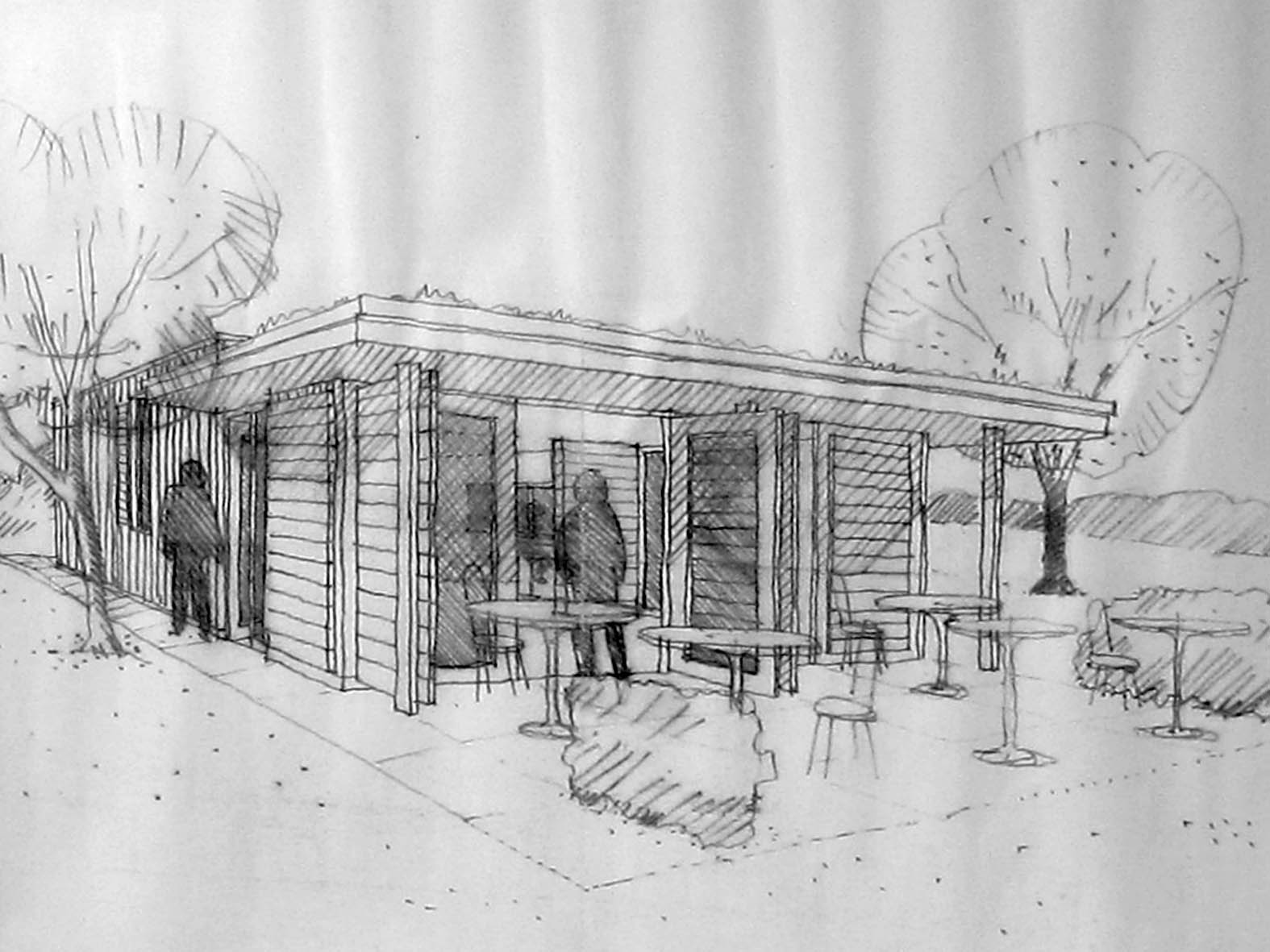
Sketch of proposed Pistachios Cafe

In an adjacent corner refreshments were provided by Pistachios who were also displaying plans for their cafe in the park.  Planning permission is, hopefully, imminent so construction should start fairly soon.  I can hardly wait!

Plan of Pistachios Cafe
As I left, the sun was breaking through the mist as it set and quite a few of us attempted to capture it with 'phone or camera.  I wonder how everyone else's turned out?

Stone Circle in the evening mist

Tuesday, 1 November 2011

Bird Count Highlights

Bird counts at Hilly Fields have continued on a monthly basis and details can now be found on the Lewisham Nature Conservation website: http://natureconservationlewisham.co.uk/the-parks/

Some of the recent highlights are as follows:
  • Two Chiffchaffs were heard calling on 29 September - a first for Hilly Fields since the Bird Champion scheme began. Probably a rest stop on their migratory journey, although an increasing number of these warblers are over-wintering in the UK
  • Five Mistle Thrushes were seen on 10 October in the line of trees leading down to Hilly Fields Crescent 
  • A Blackcap was spotted in the trees bordering Vicars Hill on 26 October. These are still uncommon on HF although one was heard singing in the wood during our dawn chorus walk back in May
    •  Long-tailed Tits - a flock of about 12 seen in the trees bordering Vicars Hill on 26 October. Lovely birds if you can get a close-up view
    • Great Spotted Woodpecker - a clear eye-level view of one on 26 October, hammering away at the trunk of a tree near the playground. The GSW has an unmistakeable combination of black, white and red colours and a bouncy flight
    • Goldfinches - a flock of about 16 is usually seen and heard in the trees around Prendergast School
     What we haven't seen yet are any Redwings, although they've been pouring into the country from Scandinavia since mid-October. Members of the thrush family, Redwings can be identified by a clear white stripe along the side of the head and, believe it or not, by a touch of red under the wing. They've turned up for the last three winters on Hilly Fields with as many as 40 counted in January 2010. If you see any, please let us know via the comments below.


    Monday, 31 October 2011

    Opening up the Blog

    I'm gradually opening up this blog to enable others to contribute.